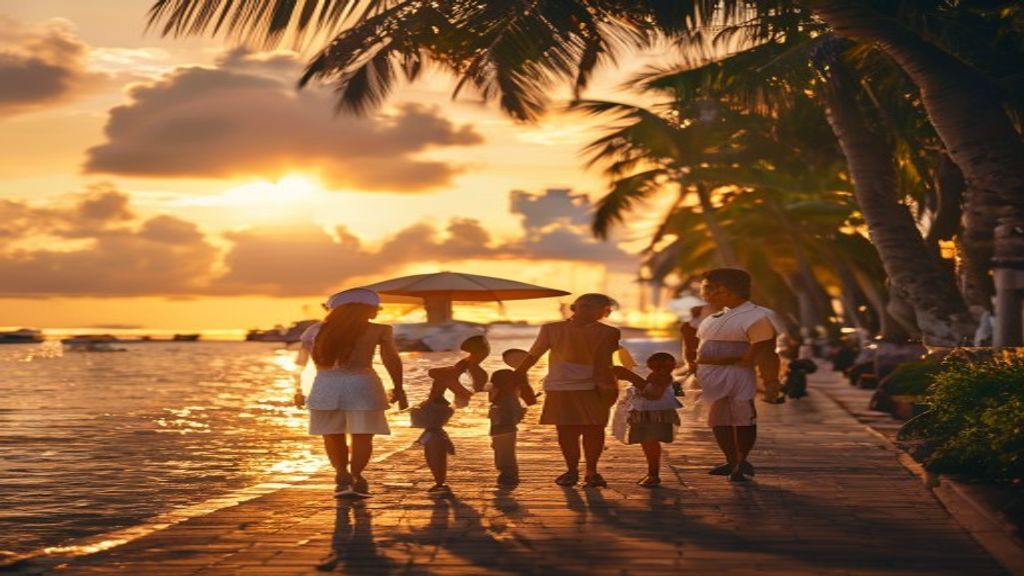
Moving to Panama with Family: Your Guide to the Dependent Visa in 2026
Panama stands out as a premier destination for families seeking a blend of modern infrastructure, a favorable tax environment, and a high quality of life. This comprehensive guide details the pathways to securing a Dependent Visa in 2026, ensuring a smooth transition for you and your loved ones to this tropical hub of opportunity.
For high-net-worth individuals, entrepreneurs, and professionals considering international relocation, Panama presents a compelling proposition. Its strategic location, dollarized economy, and territorial tax system are significant draws. But for those with families, the primary concern is often the seamless integration and legal status of their loved ones. Fortunately, Panama's immigration framework is designed to be family-friendly, offering several clear pathways for dependents to gain residency. This guide explores the intricacies of the Dependent Visa process for 2026, providing the clarity needed to make this life-changing move.
At its core, the Dependent Visa allows a primary resident—whether temporary or permanent—to sponsor their immediate family members. This ensures that families can remain united while building a new life in Panama. The eligibility for dependents is clearly defined under Panamanian law, creating a straightforward process for those who qualify.
Who Qualifies as a Dependent?
Panama's immigration law specifies which family members can be included in a residency application as dependents. The primary categories are:
- Spouse: A legally married partner can be included, regardless of their nationality. A valid marriage certificate is the key document required for proof.
- Minor Children: Children under the age of 18 are eligible for dependent status.
- Adult Children (18-25): Children between these ages can also qualify, provided they are unmarried, financially dependent on the primary applicant, and enrolled as full-time students at a Panamanian university.
- Parents: The parents of the principal applicant can also be included as dependents.
- Children with Disabilities: There are no age restrictions for children with certified disabilities who are dependent on the primary applicant.
It is important to note that all dependents receive the same residency status as the main applicant, allowing the entire family to reside legally in Panama.
Pathways to Residency for Families
<compact-cta></compact-cta>
Several of Panama's most popular residency programs allow for the inclusion of dependents. The best route for your family will depend on your nationality, financial situation, and long-term goals. Here are the most common and effective pathways in 2026:
The Friendly Nations Visa
This is one of the most popular routes for citizens of 50 countries that maintain strong economic and professional ties with Panama, including the United States, Canada, the United Kingdom, and most of the European Union. To qualify, the main applicant must establish an economic or professional link to Panama. This can be achieved through:
- Employment: Securing a job with a Panamanian company.
- Real Estate Investment: Purchasing property in Panama with a minimum value of $200,000 USD.
- Bank Deposit: Placing a fixed-term deposit of at least $200,000 USD in a Panamanian bank.
Initially, applicants receive a two-year provisional residency permit. After this period, they can apply for permanent residency. The primary applicant's dependents can be included in the same application, and they are also eligible for a work permit once residency is granted.
The Qualified Investor Visa (Panama's Golden Visa)
For those able to make a more substantial investment, the Qualified Investor Visa offers a fast track to immediate permanent residency. This program is open to all nationalities and has a processing time of approximately 30-90 days. The investment options include:
- Real Estate: An investment of at least $300,000 USD in Panamanian real estate.
- Securities: A stock market investment of $500,000 USD through a licensed Panamanian brokerage.
- Fixed-Term Bank Deposit: A deposit of $750,000 USD in a Panamanian bank for a minimum of five years.
This visa is particularly attractive for families seeking long-term stability and flexibility, as it allows for the inclusion of a spouse, dependent children under 25, and parents. One of the key advantages is the minimal physical presence requirement; residents only need to visit Panama once every two years to maintain their status.
The Pensionado (Retirement) Visa
This world-renowned program is not limited by age and is available to anyone with a guaranteed lifetime pension of at least $1,000 USD per month. This income must come from a verifiable source like a government pension, private company pension, or annuity. The program grants immediate permanent residency and offers a host of discounts on everything from travel and entertainment to healthcare.
For families, the Pensionado Visa is an excellent option. Dependents, including a spouse and children, can be included by demonstrating an additional monthly income of $250 USD per dependent. This makes it one of the most accessible and cost-effective routes to permanent residency for retirees and their families.
Digital Nomad Visa
For those who wish to experience Panama with their family on a more temporary basis, the Digital Nomad Visa is an ideal choice. It grants a legal residency of nine months, which can be renewed for an additional nine months. The primary requirement is proof of a minimum monthly income of $3,000 USD from a foreign source. Families can be included by demonstrating a higher monthly income of $4,000 USD.
A major benefit is that income earned from foreign sources is not taxed in Panama. While this visa does not lead directly to permanent residency, it offers a fantastic opportunity for families to live legally in Panama and explore the country before committing to a longer-term move.
The Application Process: Key Documents and Requirements
Regardless of the specific visa path chosen, the application process for dependents involves a standard set of documents. Working with a reputable advisory firm is crucial to ensure all paperwork is correctly prepared, authenticated, and translated into Spanish.
General requirements for all applicants (including dependents over 18) typically include:
- Valid Passport: With at least six months of validity remaining.
- Criminal Background Check: From the country of origin or residence for the past two years, duly apostilled or legalized.
- Health Certificate: Issued by a licensed doctor in Panama.
- Passport-sized Photographs.
Specific documents for dependents include:
- For Spouses: A legally recognized marriage certificate, recently issued and apostilled.
- For Children: A birth certificate proving the relationship to the primary applicant, also recently issued and apostilled.
- For Adult Students: Proof of full-time enrollment in a Panamanian educational institution and a declaration of single status.
Proving Economic Solvency
For most dependent visas, the principal applicant must demonstrate the financial capacity to support their family members in Panama. This is typically done through a responsibility letter and evidence of a stable income. For a standard Permanent Resident Dependent Visa, for example, the main resident must show a minimum income of $1,000 USD per month, plus an additional $100 for each dependent.
Life in Panama for Families: Cost of Living and Opportunities
Panama offers a high quality of life at a relatively affordable cost compared to North America and Europe. A family of four can live comfortably on a monthly budget ranging from approximately $2,857 to $4,154, excluding rent. Housing is also reasonably priced, with modern apartments available in Panama City for well under what you would pay in a comparable global city.
The country boasts excellent international schools, high-quality private healthcare, and a wealth of recreational activities, from exploring rainforests to enjoying pristine beaches on two coasts.
Navigating the Legal and Financial Landscape
The IFZA Free Zone Advantage
For entrepreneurs and business owners, establishing a company in a Free Zone can be a strategic entry point for the entire family. The recently launched IFZA Panama Free Zone, for instance, offers significant fiscal advantages, including exemptions from corporate income tax, import duties, and VAT. Setting up a business within IFZA provides a solid economic link to the country, which can be the basis for a residency application. Furthermore, IFZA offers comprehensive support services, including assistance with visa and immigration processes for employees and their families.
Experts like Michael Steinbach of Panama Founders highlight that the Free Zone model provides a streamlined and compliant pathway for international business professionals to relocate with their families, leveraging benefits like 100% foreign ownership and a dollarized economy. This integrated approach simplifies the entire process, from company formation to securing family residency.
Tax and Crypto Regulations in 2026
Panama operates on a territorial tax system, meaning that income earned outside of Panama is generally not subject to Panamanian taxes. This is a significant advantage for expatriates who continue to earn income from international sources.
Regarding cryptocurrencies, Panama currently operates in a legal gray area without a specific, comprehensive regulatory framework for digital assets. While new legislation (Bill No. 247) has been proposed to create a more formal structure, as of early 2026, it has not been enacted. This means that crypto-related businesses can operate under general corporate and AML/CFT regulations, offering a high degree of flexibility. For investors, there is currently no capital gains tax on cryptocurrency assets.
The Path to Panamanian Citizenship
For families looking to make Panama their permanent home, most permanent residency visas open a pathway to citizenship. After maintaining permanent residency for five years, individuals are typically eligible to apply for naturalization. The process involves demonstrating ties to the country and passing a basic Spanish language and civics exam. A Panamanian passport offers excellent global mobility, with visa-free access to over 140 countries.
Relocating to a new country is a monumental decision, especially with a family. Panama’s welcoming immigration policies, combined with its economic stability and exceptional quality of life, make it a top-tier choice. By understanding the different Dependent Visa options and partnering with experienced advisors like Panama Founders, you can ensure a smooth and successful transition for your entire family, unlocking a future of opportunity in the heart of the Americas.
Speak with a Panama Incorporation Expert
Discover your optimal corporate and tax strategy for 2026.
Schedule Confidential Consultation